
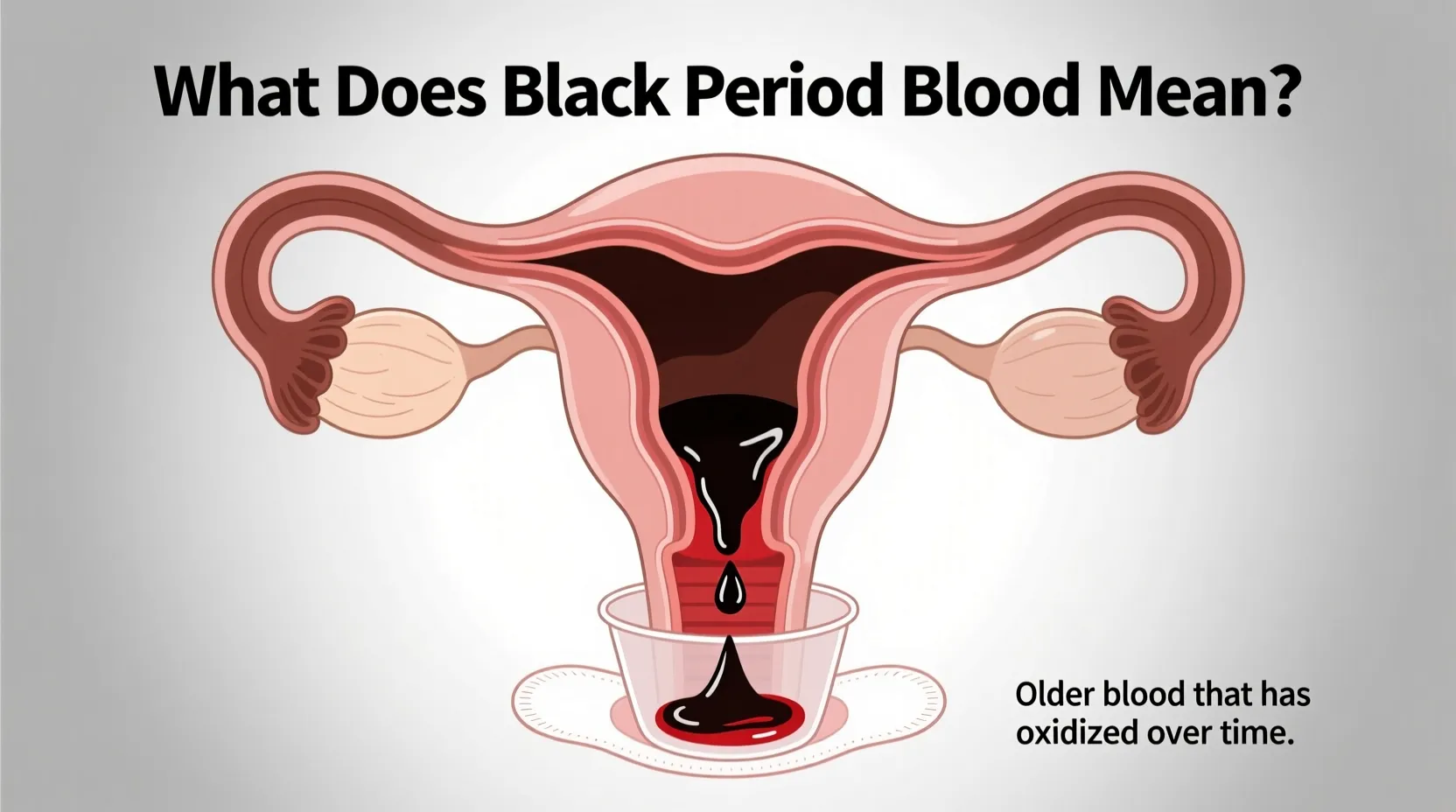
Ever seen black period blood and instantly panicked, wondering “Wait… is this normal?”
You’re not alone many people experience darker menstrual blood at some point and immediately search for answers. The color can look surprising, especially if you’re used to bright red flow. I remember the first time I saw it and thought something serious was wrong, but it turned out to be totally normal in many cases.
Quick Answer:
Black period blood usually means old menstrual blood that took longer to exit the uterus and oxidized (darkened) over time. It’s generally normal, especially at the beginning or end of your period.
What Does Black Period Blood Mean in Text?
Black period blood refers to old, oxidized menstrual blood. When blood stays in the uterus longer, it reacts with oxygen and turns dark brown or black instead of bright red. This is extremely common and often nothing to worry about.
Example:
“You might see black blood on day one — that’s just old blood from last cycle.”
In short:
Black period blood = Old blood = Usually normal and slow-moving menstrual flow.
Where Is Black Period Blood Commonly Seen?
You may notice black period blood in several common situations:
- 🩸 Beginning of your period
- 🩸 End of your period when flow is lighter
- 😴 After sleeping all night (blood pools and darkens)
- 🧘 When your flow is slow or light
- 👀 After spotting between cycles
- 🤰 Early pregnancy spotting (rare—consult a doctor)
- 🧡 Postpartum bleeding (lochia) in some stages
It’s a normal, non-formal, health-related term — not slang used in texting.
Examples of Black Period Blood in Conversation
A: i’m seeing black blood on the first day. is that normal?
B: yeah, it’s just old blood coming out ❤️
A: my period started but the blood is super dark
B: totally fine, it’s usually older blood
A: i got black discharge at the end of my cycle
B: that happens when the flow is slow
A: should i worry if the blood looks almost black?
B: only if it comes with pain or odor
A: is black period blood normal after sleeping overnight?
B: yes, it oxidizes when it sits longer
When to Use and When Not to Use “Black Period Blood”
When It Is Normal
- Slow or light flow
- Start or end of your period
- After long sleep or sitting
- After spotting
- Postpartum stages
When It May Need Medical Attention
- Comes with a strong odor
- Caused by intense pain
- Appears with unusual large clots
- Happens outside your cycle repeatedly
- Shows up during pregnancy
- Paired with fever or dizziness
Context Comparison Table
| Context | Example Phrase | Why It Works |
|---|---|---|
| Normal cycle start/end | “It’s dark because the blood is older.” | Slow flow = old blood |
| Spotting | “Black discharge before period can be normal.” | Blood stays longer |
| Postpartum | “Lochia can sometimes appear dark.” | Normal healing process |
| Emergency | “See a doctor if there’s odor or severe pain.” | Safety reason |
| Pregnancy | “Black blood during pregnancy should be checked.” | Needs medical review |
Similar Terms or Related Menstrual Changes
| Term | Meaning | When It Happens |
|---|---|---|
| Brown blood | Old blood, slightly fresher than black | Start/end of period |
| Dark red blood | Older but still flowing steadily | Mid or late period |
| Bright red blood | Fresh, active flow | Middle of cycle |
| Pink discharge | Blood mixed with cervical fluid | Light flow or spotting |
| Orange blood | Mixed with cervical mucus | Possible infection if odor |
FAQs About Black Period Blood
Why is my period blood black on the first day?
Because old blood leftover from the previous cycle is getting cleared out.
Why is it black at the end of my period?
Your flow is lighter and slower, giving blood more time to oxidize.
Is black blood a sign of pregnancy?
Not typically. But if you’re pregnant and see black bleeding, contact a doctor.
Can infections cause black period blood?
Rarely. Infections are more associated with foul odor, yellow/green discharge, or pain.
Is black period blood dangerous?
Not usually. It’s normal unless paired with pain, odor, or unusual timing.