
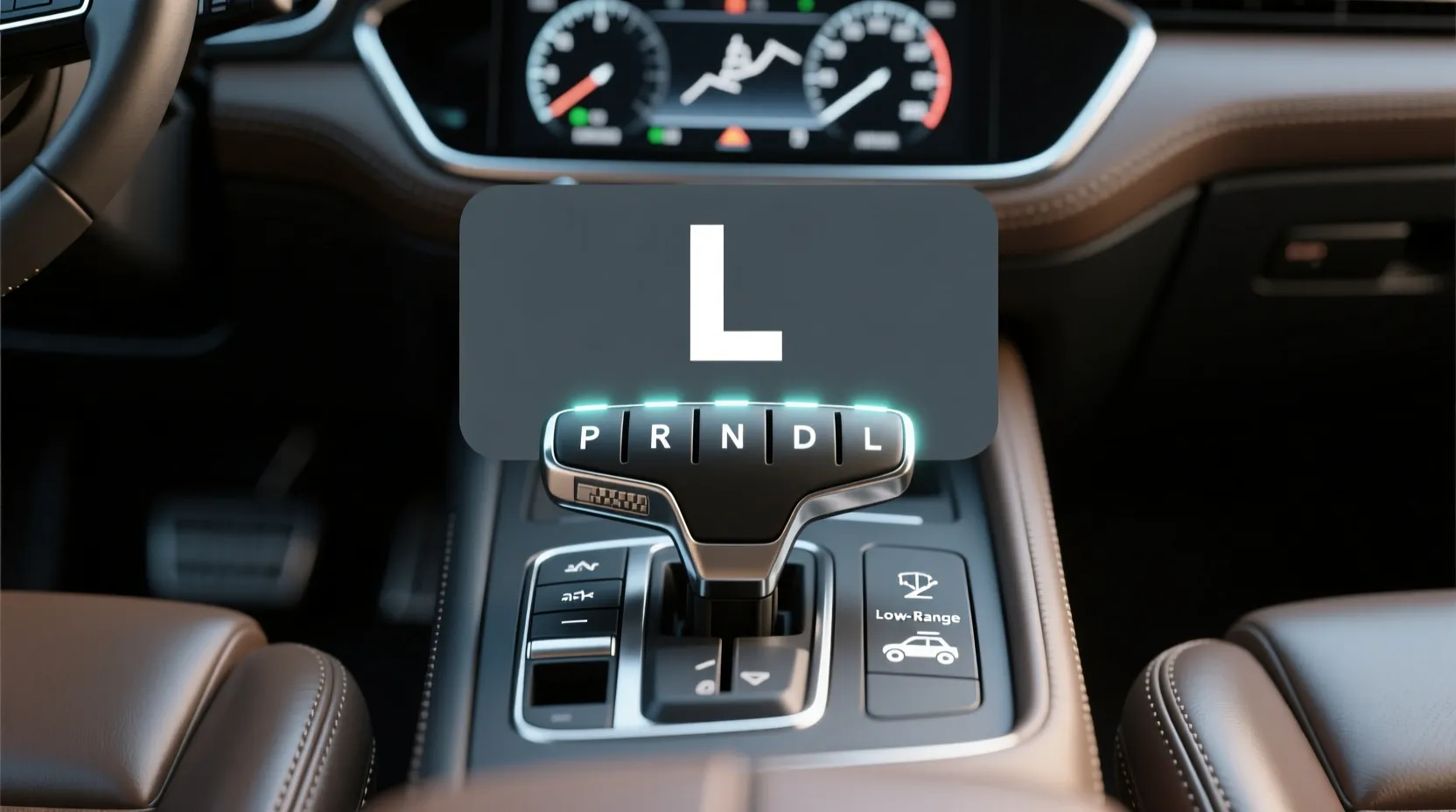
Have you ever jumped into a car and noticed the gear labeled L, wondering what it could possibly mean?
At first, it might look confusing, especially if you’re used to the standard P, R, N, D gears.
You might have even asked a friend or scrolled through Google for answers, only to find technical jargon that doesn’t make sense.
Don’t worry you’re not alone! Understanding this little letter can actually make driving safer and easier.
Quick Answer: L means “Low Gear”. It’s a practical way to give your car more power at slower speeds, especially when going uphill, towing, or driving in slippery conditions.
What Does L Mean in Text?
In the context of cars, L stands for Low Gear. Unlike the usual drive mode, selecting L keeps your car in a lower gear, which increases engine power and braking control. This is especially helpful when:
- Driving down steep hills
- Navigating slippery roads like snow or mud
- Towing heavy loads
Example: You’re driving down a mountain and shift to L. The car slows naturally without overusing the brakes.
In short: L = Low Gear = More engine power and better control at low speeds.
Where Is L Commonly Used?
The L gear is standard in automatic cars but is more often noticed in:
- 🚗 Automatic Cars — to help in difficult terrains
- 🏔 Mountain Driving — maintains engine control on slopes
- ❄️ Snowy or Muddy Roads — reduces wheel spin
- 🚚 Towing Situations — gives extra power for pulling heavy objects
It’s casual for driving, meaning it’s not something used daily for normal city driving, but critical in certain conditions.
Examples of L in Conversation
Here are some real-life texting or social chat examples where someone might mention L gear:
A: “I’m heading up the hill, should I change gears?”
B: “Yeah, put it in L, you’ll have more control 🚗”
A: “Why is my car shaking downhill?”
B: “You’re in D, try L for a smoother ride 🏔️”
A: “Can I use L all the time?”
B: “Nope, just when going slow or towing ❄️”
A: “Stuck in snow, what now?”
B: “Shift to L, should help with traction 🌨️”
A: “Feeling nervous about this steep road.”
B: “Easy, just go L and take it slow 🙂”
When to Use and When Not to Use L
✅ When to Use
- Driving downhill or uphill
- Towing heavy loads
- Slippery roads (snow, mud, ice)
- Low-speed maneuvering
❌ When Not to Use
- Everyday city driving
- High-speed highway driving
- Fuel-efficient driving
- Normal traffic conditions
Comparison Table:
| Context | Example Phrase | Why It Works |
|---|---|---|
| Steep Hill | “Shift to L 🚗” | Maintains control |
| Towing | “Use L for extra power” | Prevents strain on engine |
| Highway | “Drive in D” | Efficient & safe at high speed |
| Snowy Road | “Switch to L ❄️” | Reduces wheel spin |
Similar Slang Words or Alternatives
| Slang | Meaning | When to Use |
|---|---|---|
| D | Drive | Everyday driving |
| R | Reverse | Backing up |
| N | Neutral | Idling or towing |
| P | Park | Stationary car |
| 1,2 | Low Gears (manual) | Extra power or control |
FAQs About L
What is the difference between L and D?
D is for normal driving, while L keeps the car in a low gear for more control at slow speeds.
Can I drive in L on the highway?
No, L is not suitable for high-speed driving as it puts extra stress on the engine.
Does using L save fuel?
No, using L actually consumes more fuel because the engine works harder at lower gears.
Is L the same in all cars?
Most automatic cars use L for Low Gear, but some have numeric low gears (1, 2) with the same function.
Conclusion
Knowing what L means in a car can make your driving safer and more efficient in tricky situations.
It’s a simple yet powerful gear option that helps with steep hills, towing, or slippery roads.
Next time you see L on your gear shift, you’ll know exactly when and how to use it keeping your ride smooth and stress-free.