Ever been scrolling through TikTok or chatting with Spanish-speaking friends and suddenly see someone say “¡Pinche!”?
The first time I saw it, I paused and thought, “Wait… is this good? Is it bad? Are they joking or yelling at someone?” It definitely wasn’t the cute type of slang you casually toss into a message.
If you’ve ever felt the same confusion, don’t worry you’re about to get the clearest breakdown of what pinche really means, how it’s used, and when to avoid it.
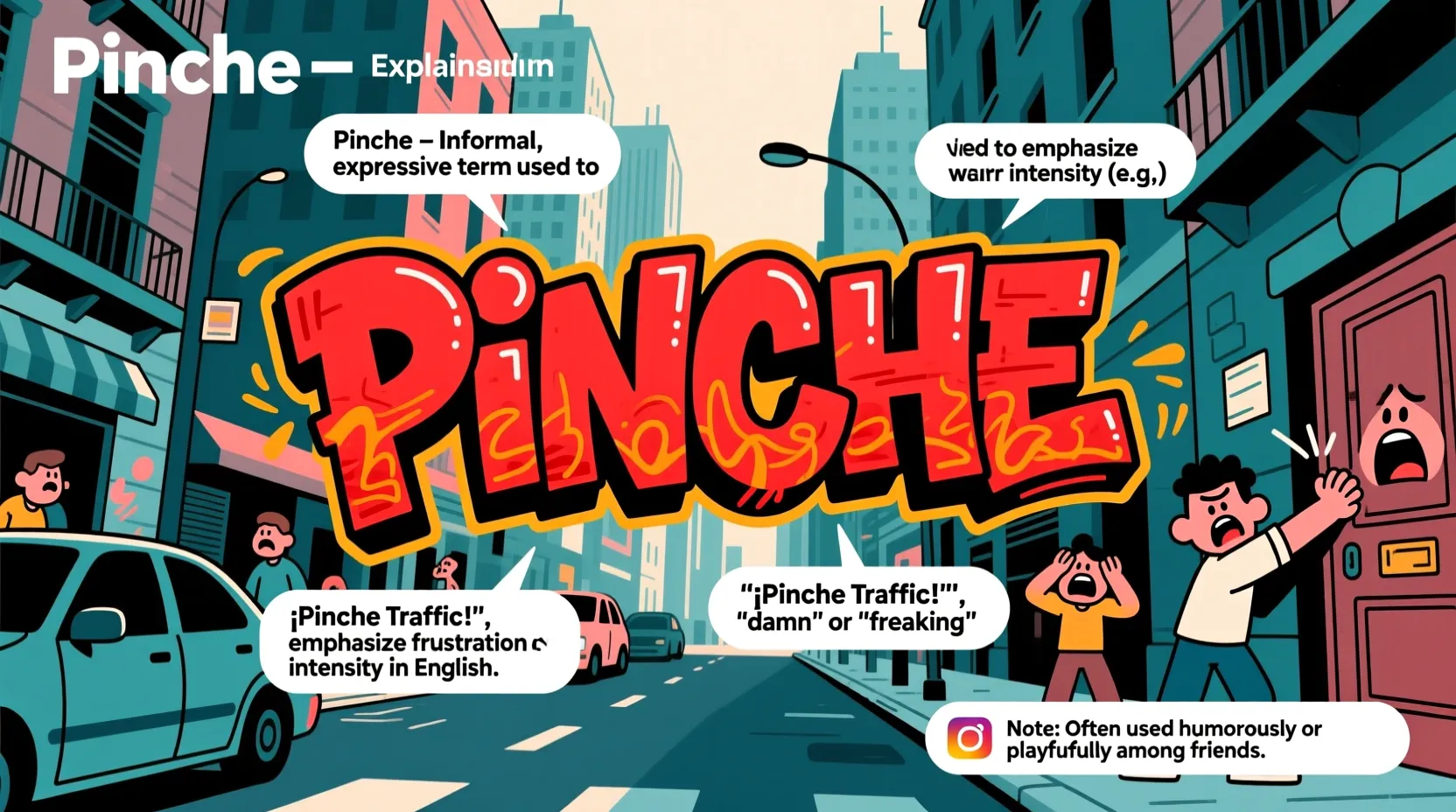
Quick Answer: Pinche means “damn,” “freaking,” or “” in Spanish. It’s a rude and informal word used to add anger, emphasis, or frustration.
What Does Pinche Mean in Text?
Pinche is a Spanish slang insult used to express annoyance, anger, or strong emphasis. It’s similar to saying “damn,” “freaking,” or “” in English, depending on the tone. It can be directed at a person, situation, or object — and it’s never polite.
Example:
“Ese pinche teléfono no sirve.”
Translation: “That damn phone doesn’t work.”
In short: pinche = “damn//freaking” = used to show annoyance or intensity.
Where Is Pinche Commonly Used?
You’ll see pinche mostly in casual or heated conversations, especially in Mexican slang. It appears in:
- 💬 Text messages between friends
- 🤳 TikTok comments
- 📸 Instagram stories & captions
- 🎮 Gaming chats
- 😂 Memes
- 🗣️ In-person arguments or rants
- 🇲🇽 Everyday Mexican Spanish (informal)
It is not appropriate for formal, respectful, or professional settings. It’s definitely a “social-only” slang word with a rude tone.
Examples of Pinche in Conversation
A: bro this pinche traffic is killing me 😤
B: fr bro, it’s horrible today
A: por qué está tan pinche caro todo 😭
B: welcome to life lol
A: mi pinche wifi no carga nada 😒
B: restart it 😂
A: oye viste al pinche luis hoy?
B: 😂 yeah he was acting wild
A: tengo un pinche examen mañana
B: rip 😭 good luck tho
A: esa pinche app siempre falla
B: yeah it glitches nonstop
The When to Use and When Not to Use Pinche
When to Use
- With close friends who understand your tone
- When ranting or joking in a casual chat
- When expressing frustration
- In memes, jokes, gaming, or slang-heavy convos
- When you want strong emphasis
When Not to Use
- In school, work, or professional messages
- With elders or authority figures
- When politeness is required
- In emails or formal chats
- When you’re unsure how someone will take the tone
Comparison Table
| Context | Example Phrase | Why It Works |
|---|---|---|
| Friend Chat | “este pinche día fue eterno 😂” | Casual & expressive |
| Work Chat | “This task is taking longer than expected.” | Professional & neutral |
| “Please let me know if you need additional information.” | Formal & respectful | |
| Family/Respectful Setting | “Fue un día difícil.” | Polite & safe |
Similar Slang Words or Alternatives
| Slang | Meaning | When to Use |
|---|---|---|
| Maldición | damn | Mild frustration |
| Carajo | damn it / hell | Stronger annoyance |
| Joder | to damn / to screw | Spain slang, casual |
| Chale | damn / ugh | Casual disappointment (Mexico) |
| Qué hueva | what a drag | Complaining casually |
| Qué lata | how annoying | Polite alternative |
FAQs About Pinche
Is “pinche” a bad word?
Yes — it’s considered rude, vulgar, and offensive in many situations.
Is it used only in Mexico?
Mainly yes. It’s heavily associated with Mexican Spanish, though people in other countries recognize it.
Can I use it jokingly?
Yes, but only with close friends who understand your tone.
Does it always mean “damn”?
Not always — sometimes it means “,” “freaking,” or “useless,” depending on context.
Is it safe to use on social media?
It’s fine in casual spaces, but avoid using it in professional profiles or public posts if you want to maintain a clean impression.
Conclusion
Pinche is one of the most common and most misunderstood slang words in Mexican Spanish. It’s emotional, expressive, and often rude, but widely used among friends or in casual rants. Just remember: it’s great for humor and frustration, but never appropriate for formal situations.
Now you know what it means, how to use it, when to avoid it, and what alternatives you can choose if you want something a little softer.